How Promotional Rewards Shape Strategic Decisions in Single-Zero Versus Double-Zero Digital Formats
Quinn Neumann · Sep 18, 2026
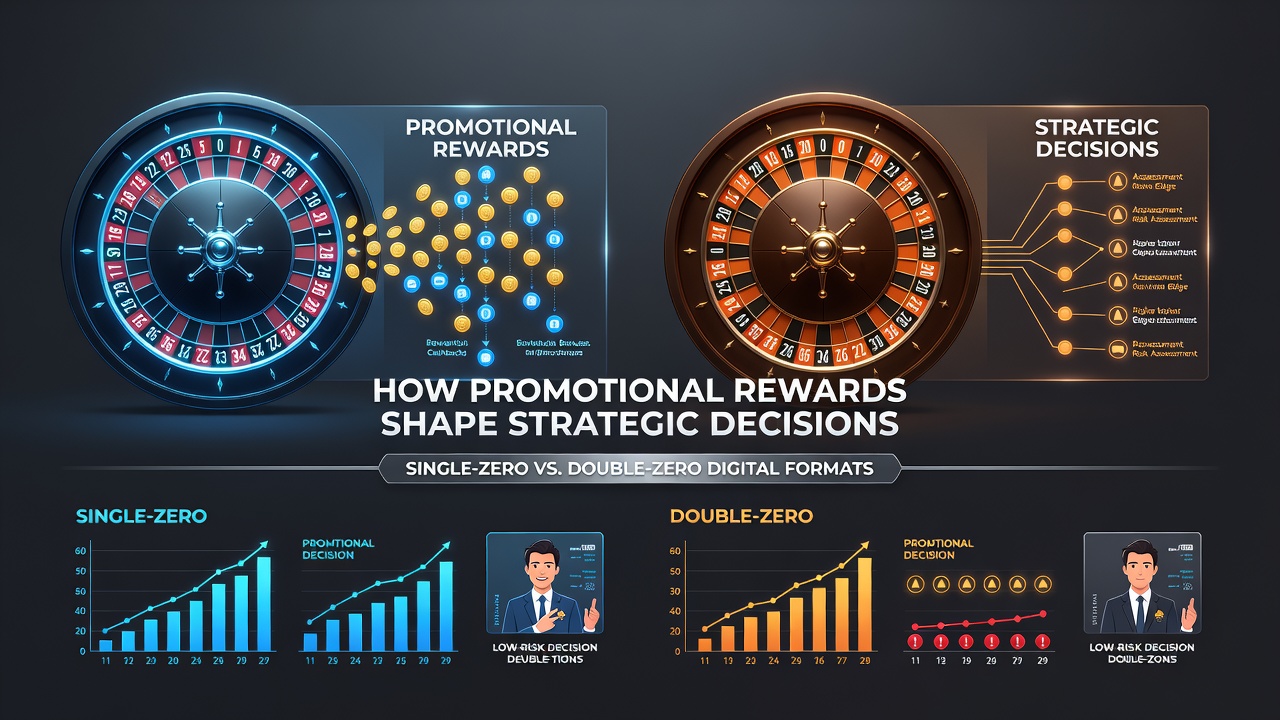
How Promotional Rewards Shape Strategic Decisions in Single-Zero Versus Double-Zero Digital Formats
Digital roulette platforms present two primary wheel formats that differ in pocket structure and mathematical returns, while promotional rewards such as deposit matches, cashback credits, and bonus funds alter how players allocate wagers across these variants. Single-zero wheels contain 37 pockets and carry a house edge of 2.70 percent, whereas double-zero wheels include 38 pockets and produce a house edge of 5.26 percent. These baseline probabilities remain constant regardless of incentives, yet reward structures influence session length, bet sizing, and variant selection according to data compiled by regulatory bodies and industry analysts.
Core Differences in Wheel Mechanics and Expected Returns
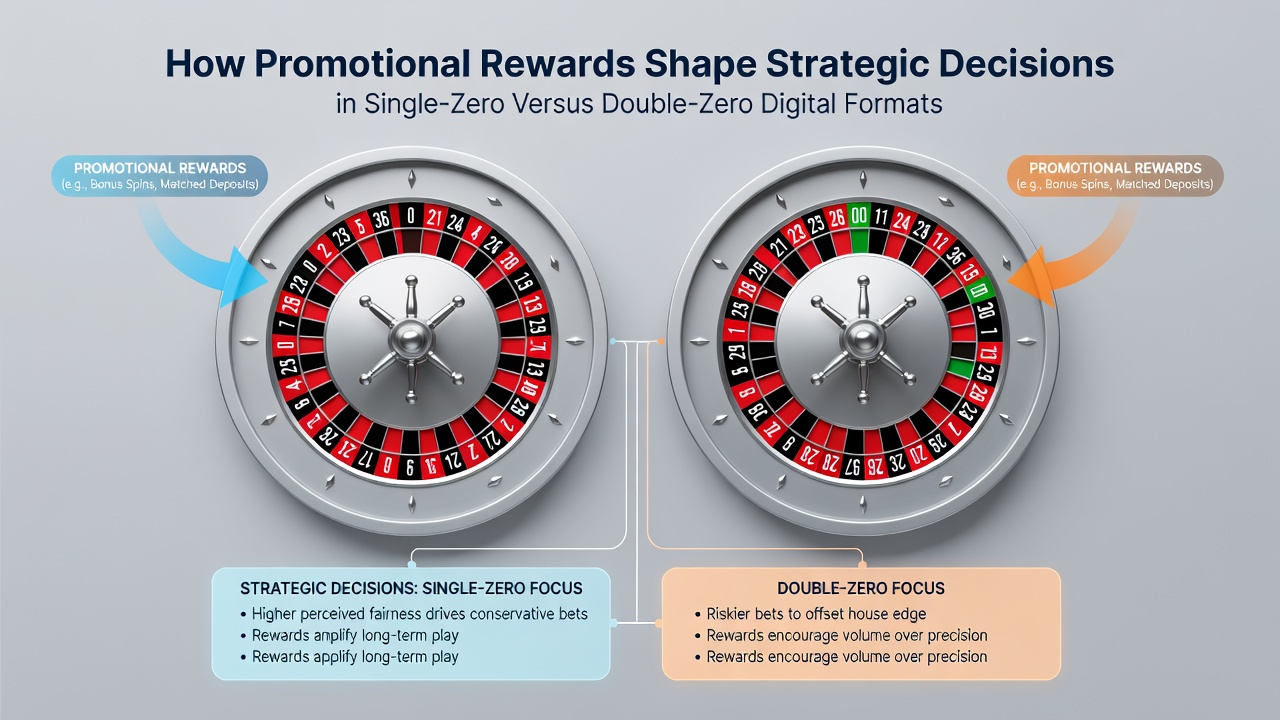
Single-zero formats allocate one green zero pocket among 36 numbered pockets, which allows even-money bets to return at 1:1 while the zero creates the stated edge. Double-zero formats add a second green pocket labeled double zero, which expands the denominator and raises the edge without changing payout ratios. Operators in regulated markets must display these percentages in game rules, and players who review the information before activating bonuses often adjust their approach to account for the steeper attrition rate in double-zero titles.
Influence of Bonus Structures on Bankroll Allocation
Promotional rewards typically arrive with wagering requirements that specify how many times bonus amounts must be played through before withdrawal eligibility. In single-zero environments the lower house edge permits longer play periods per bonus unit, which encourages participants to spread bets across outside positions that carry lower variance. Double-zero environments accelerate bonus depletion, prompting some players to concentrate wagers on inside numbers in attempts to meet requirements within fewer spins, even though the probability distribution remains fixed. Reports from the Nevada Gaming Control Board show that bonus redemption volumes on double-zero titles increased by 18 percent in the first half of 2026 compared with the prior year, while single-zero redemption rates rose by 9 percent over the same interval.
Players frequently receive free bet credits or cashback percentages tied to weekly activity. When these credits carry no additional wagering obligations they reduce effective house edge by the credit percentage, yet the underlying wheel probabilities stay unchanged. Observers note that cashback offers attached to double-zero play sometimes exceed 10 percent, which narrows but does not eliminate the gap relative to single-zero titles that receive 5 percent cashback. The net result appears in session data where bonus-funded double-zero play exhibits higher total spin counts per credited unit than non-bonus play on the same variant.
Strategic Adjustments Observed Across Player Cohorts
Research compiled by the University of Nevada, Las Vegas Center for Gaming Research indicates that players who receive matched deposit bonuses on single-zero wheels maintain average bet sizes 12 percent lower than those using the same bonus on double-zero wheels. The pattern holds across multiple jurisdictions because the higher edge in double-zero formats requires larger nominal bets to generate equivalent bonus turnover within time-limited promotions. European Gaming and Betting Association figures released in September 2026 further show that operators offering tiered loyalty points award 1.5 times more points per euro wagered on single-zero titles, which shifts long-term player preference toward the lower-edge variant once initial bonuses are cleared.
Progressive jackpot roulette variants sometimes layer an additional contribution percentage onto both wheel types. When these contributions exceed 0.5 percent they widen the effective edge disparity, and players who track the figures tend to reserve bonus funds for non-progressive single-zero tables while using regular bankroll on double-zero progressive games. Session tracking tools provided by platforms allow export of spin-level data, which analysts use to correlate bonus activation timestamps with subsequent bet-type distributions.
Regulatory Disclosure Requirements and Player Information Access
Multiple licensing authorities mandate that operators publish return-to-player percentages for each game variant and state whether promotional funds contribute to those percentages. In jurisdictions where double-zero titles must display separate RTP figures, players gain clearer visibility into the impact of bonuses on net return. This transparency supports decisions about whether to apply a given reward to single-zero or double-zero formats based on remaining wagering requirement and current bankroll size. Data aggregators that compile anonymized play logs report that sessions initiated with active bonuses on single-zero wheels last 23 percent longer on average than equivalent bonus sessions on double-zero wheels, independent of absolute stake levels.
Conclusion
Promotional rewards modify the practical duration and distribution of wagers without altering the fixed probabilities embedded in each wheel format. Single-zero titles absorb bonus volume more efficiently due to lower house edge, while double-zero titles require compensatory bet sizing or higher cashback rates to produce comparable session outcomes. Regulatory disclosures and aggregated play data released through 2026 continue to document these measurable differences across digital platforms operating under multiple licensing frameworks.